
How to Plan Photography Mini Sessions Without Running Behind
Three clients booked back to back. Fifteen minutes each. It looks tidy on the calendar, until someone needs help finding the studio and the next client arrives while you're still finishing the first session. Now the rest of the morning has to absorb the delay.
I'm Austen Hunter, a working photographer and the 2024 Navy Civilian Photographer of the Year. My headshot and military portrait work puts a lot of value on preparation, but the person in front of the camera still needs time and attention.
For mini sessions, that starts with what you promise and how you schedule it. Let's build a day that leaves room for both the photographs and the people.

Key Takeaways
|
Define the Session Before Selling Slots
What can you comfortably deliver in the time you're selling? Settle that before opening bookings. Define the location, group size and included images, then explain how clients choose photographs and whether extra files cost more.
Wardrobe changes and extra setups can eat through a short appointment. Time them before promising them. If someone needs several looks, a large group or more time to settle in, help them choose a full session before they book.
Professional Photographers of America's mini-session training overview emphasizes preparation across scheduling, paperwork and client communication. Those decisions deserve time before the first session starts.
Give Each Appointment Room to Finish
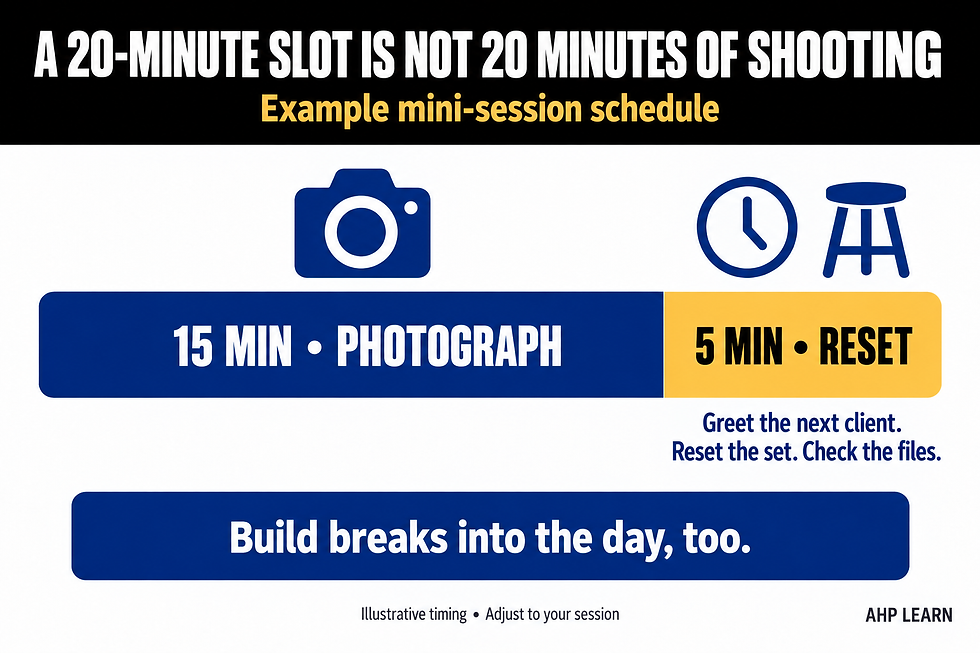
Here's a sample morning with 15 minutes of photography and a five-minute reset. Test those numbers against your own setup before using them.
Time | Plan |
|---|---|
9:00–9:15 | Photograph the first client. |
9:15–9:20 | Finish the handoff and reset. |
9:20–9:35 | Photograph the second client. |
9:35–9:40 | Reset and greet the next client. |
9:40–9:55 | Photograph the third client. |
9:55–10:10 | Reset, take a break and prepare for the next block. |
Notice that three sessions occupy more than an hour once a useful break is included. Plan setup before the first arrival and pack-down after the last departure, too. If the venue has a fixed rental window, both must fit inside it.
During a rehearsal, time the slow parts: finding the booking, placing a family, adjusting clothing, checking focus and explaining what happens next. If the test runs long, reduce the scope or lengthen the slot before selling it.
Send One Preparation Message
Give clients a single message they can find on their phone. Include the address, parking, arrival instructions, session start and end time, wardrobe guidance and a contact method for problems that day. Explain whether an early arrival has somewhere to wait.
State what happens when a client is late. If the appointment must end at its original time, say so during booking as well as in the reminder. An unexpected extra ten minutes affects everyone behind that client.
For a headshot event, adapt the relevant questions from my headshot client questionnaire. Keep only the answers that affect preparation; a short appointment does not need a long intake form.
“A short session shouldn't make your client feel rushed. Build enough room into the schedule to give the person in front of your camera your full attention.” — Austen Hunter
Build a Repeatable Shooting Plan
Choose a starting frame and a few variations that fit the promised result. Get those photographs before chasing an extra idea. Experimenting is easier when you've already made what the client came for.
Have a simple way to match each client to their files, and check that it works during the rehearsal. If someone assists, give them a specific role such as arrivals or schedule updates. Do not build a plan that depends on an assistant if you will be working alone.
For outdoor sessions, choose a weather decision time and an alternative before bookings open. Put the relevant late-arrival, cancellation and delivery terms in your agreement; my photography contract guide explains what to cover.
Budget for the Work After the Session
The day doesn't finish when the last client leaves. Six appointments still mean six sets of files to select, edit and deliver. Even 20 minutes of postproduction per booking would add two hours; use your own measured editing time when planning capacity.
Count preparation, communication, rental costs and delivery work when setting the offer. My photography pricing article looks beyond competing on price. The complete photography business guide connects pricing with the rest of the client workflow.
Frequently Asked Questions
How Long Should a Mini Session Be?
Long enough for the result you advertise. Rehearse the session, then add transition time around the shooting. Fifteen minutes of photography is an example, not a universal standard.
How Many Images Should I Include?
Choose a number you can consistently make and edit within the offer. Explain selection, delivery and extra-image options before booking rather than promising an unlimited gallery.
What If a Client Needs More Time?
Offer a full session when you can identify that need in advance. During a booked mini session, work within the agreed timing and discuss any further appointment separately instead of quietly delaying the next client.
Set the Expectations Before Clients Arrive
The AHP Learn store includes a Mini Session Photography Contract, which is perfect for ensuring your sessions run smoothly. Adapt the editable documents to your offer and have the terms reviewed for your business before using them.



Comments